
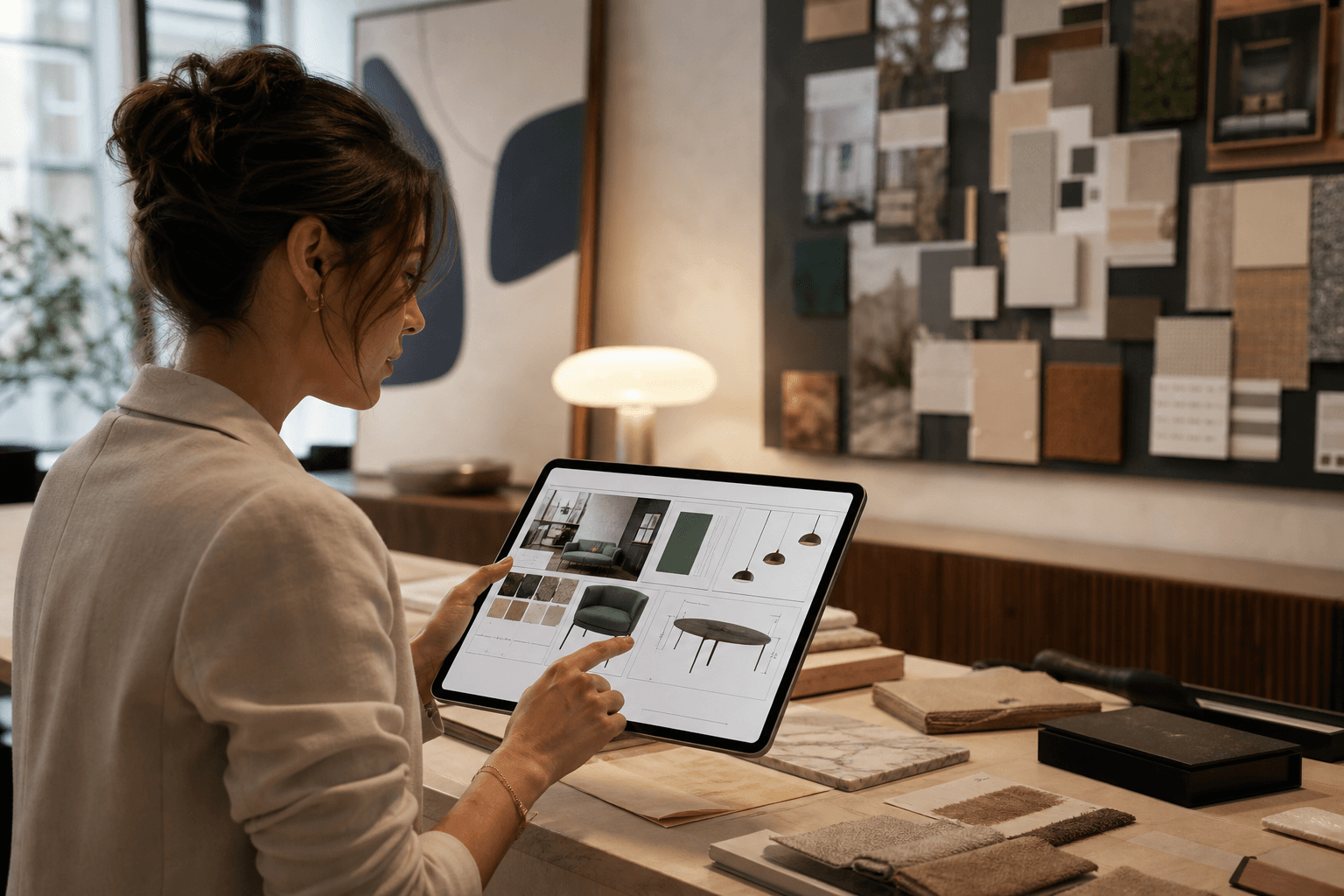
Google has officially pushed the boundaries of spatial and visual artificial intelligence with the global release of Gemini 2.0 Flash, Project Astra real-time multimodal capabilities, and Veo 2 spatial generation. For architects, spatial designers, and interior studio principals, these developments open extraordinary new frontiers in client presentations, site survey processing, and real-time concept iteration.
While previous AI tools focused primarily on text generation or isolated image generation, Google's unified multimodal architecture processes video feeds, spatial depth maps, voice narration, and massive CAD documentation simultaneously within a single context window. Here is how Google's newest AI releases are revolutionizing the design industry in 2026.
1. The 2-Million Token Context Window: Processing Entire Studio Archives
One of Gemini 2.0 Flash's most powerful capabilities is its native support for an expansive 2,000,000+ token context window. This unprecedented capacity allows design teams to feed entire project archives into the AI model in a single prompt:
- Complete BIM & CAD Documentation: Upload multi-hundred-page architectural blueprint sets, structural engineering reports, and local building codes for instant compliance querying.
- Multi-Year Vendor Catalogs: Digest full PDF catalogs from hundreds of trade suppliers to instantly search dimensions, finish options, and pricing structures.
- Complete Client History: Retain every historical email thread, moodboard feedback note, and budget adjustment across multi-year estate renovations.
2. Veo 2 & Photorealistic 3D Spatial Visualization
With Veo 2, Google has introduced cinematic video and spatial 3D render generation directly from text prompts, floorplan sketches, or 2D elevation images. Interior designers can now transform raw line-drawing schematics into immersive walkthrough videos in minutes:
Rather than waiting days or weeks for external rendering agencies, studio teams can generate photorealistic lighting simulations, material swaps (e.g., honed Carrera marble vs. brushed quartzite countertops), and spatial daylighting transitions during client workshop meetings.
3. Real-Time Site Auditing with Project Astra Multimodal Vision
Using Project Astra's real-time camera feed and low-latency audio capabilities, designers conducting site walk-throughs can simply point their mobile phone or smart glasses at a room. The AI continuously identifies:
- Spatial Dimensions & Layout Constraints: Flagging structural columns, window head heights, and plumbing outlet locations in real time.
- Material & Condition Assessment: Identifying existing flooring materials, wall finishes, and structural defects, automatically generating site survey checklists.
- Instant Spec Matching: Cross-referencing visible furniture pieces with Focuspilot's FF&E database to recommend ideal replacements or restoration specs.
4. Transforming Design Workflows with Focuspilot & Google AI
By pairing Google's multimodal AI engines with Focuspilot's dedicated studio management infrastructure, design firms bridge the gap between creative vision and financial execution. Photorealistic concepts generated via Veo 2 map directly into Focuspilot's line-item specification tables and client sign-off portals.
Learn more about Focuspilot Studio Management or read our guide on FF&E procurement schedule automation.