
Many interior designers want to build a sustainable practice aligned with who they are—then hit a reality check: design services alone often are not enough to get there. Decades of studio experience show that diversification matters, and one of the highest-leverage additions is construction management.
Introducing construction management can keep revenue more predictable and reduce the anxiety of projects that live only in drawings until install week. After years of supply-chain disruption and timeline volatility, feeling in control of delivery is not a luxury—it is business survival.
This guide explains why construction project management is the foundation of a thriving interior design business, where you fit among GCs and architects, and how to start adding the service without drowning in complexity.
Why construction project management matters for designers
Interior design project management is where creativity meets structure. Construction management extends that structure through build-out—ensuring concepts are buildable, on budget, and coordinated with trades.
When you manage construction phases confidently, clients view you as a true project leader. That trust supports higher fees, repeat work, and referrals from builders who want designers who understand site realities.
Understanding your role on construction projects
Many designers underestimate their influence on site. In practice, interior designers often bridge the client’s vision and the contractor’s execution.
Your role as a designer
- Review architectural plans early to anticipate spatial or finish conflicts
- Coordinate with trades to clarify details
- Manage communication between client, architect, and general contractor
- Translate client goals into functional, coordinated decisions
Clarifying roles on the jobsite
Understanding how each professional contributes prevents overlap and conflict:
- General Contractor (GC): Oversees construction, labor, and materials
- Project Manager: Handles timelines, budgets, and execution (sometimes within the GC team)
- Architect: Focuses on structure and compliance
- Interior Designer: Focuses on aesthetics, functionality, and client experience
Knowing the difference between a general contractor and a project manager helps you define your own scope—and choose when to step into PM-style delivery versus pure design. Define scope clearly at project start and communicate professional boundaries without apology.
Collaboration across trades
Strong collaboration turns average projects into exceptional ones. The best outcomes often come from partnerships with architects and builders who respect design input. Understanding their pain points—and inviting them to understand yours—creates harmony on site.
Everyone shares the same goal: a finished space that brings the design to life, delights the client, and functions flawlessly. Document decisions in a shared project record so “I thought we agreed on brass” does not become a Friday-night argument.
Building a construction team that supports you
Construction management requires expertise beyond boards and renderings. Knowing how to build your team is as important as any service you offer.
- What questions do you ask before hiring a specialist?
- What red flags should you never ignore?
- What should you expect from key members of the construction team?
These decisions determine project outcomes and spare headaches when something goes wrong. Being prepared is one of your best insurance policies.
Scope and expectations for construction services
A written scope for construction management should spell out site visit frequency, reporting rhythm, who issues RFIs, and how change orders are priced and approved. Vague “we will help oversee the build” language is where margin disappears.
Evaluate each job for fit: budget realism, client respect for process, and whether your current trade relationships can support the location and scale. Declining a poor-fit build is cheaper than rescuing one.
On-site leadership in practice
Physical presence matters. Site visits catch misordered materials, dimension conflicts, and finish errors before they are buried behind drywall. They also signal to trades that design intent is non-negotiable—not a suggestion.
When vendors go rogue or supply chains slip, document, communicate options the same day, and stay adaptable without panic. The designer who stays solution-focused earns loyalty from GCs who manage dozens of jobs at once.
Systems that scale construction management
You cannot oversee five active builds from memory. Standardise:
- Phase templates from demo through punch list
- Procurement tracking tied to install sequence
- Client-visible status for long-lead items
- Change-order logs with schedule and cost impact
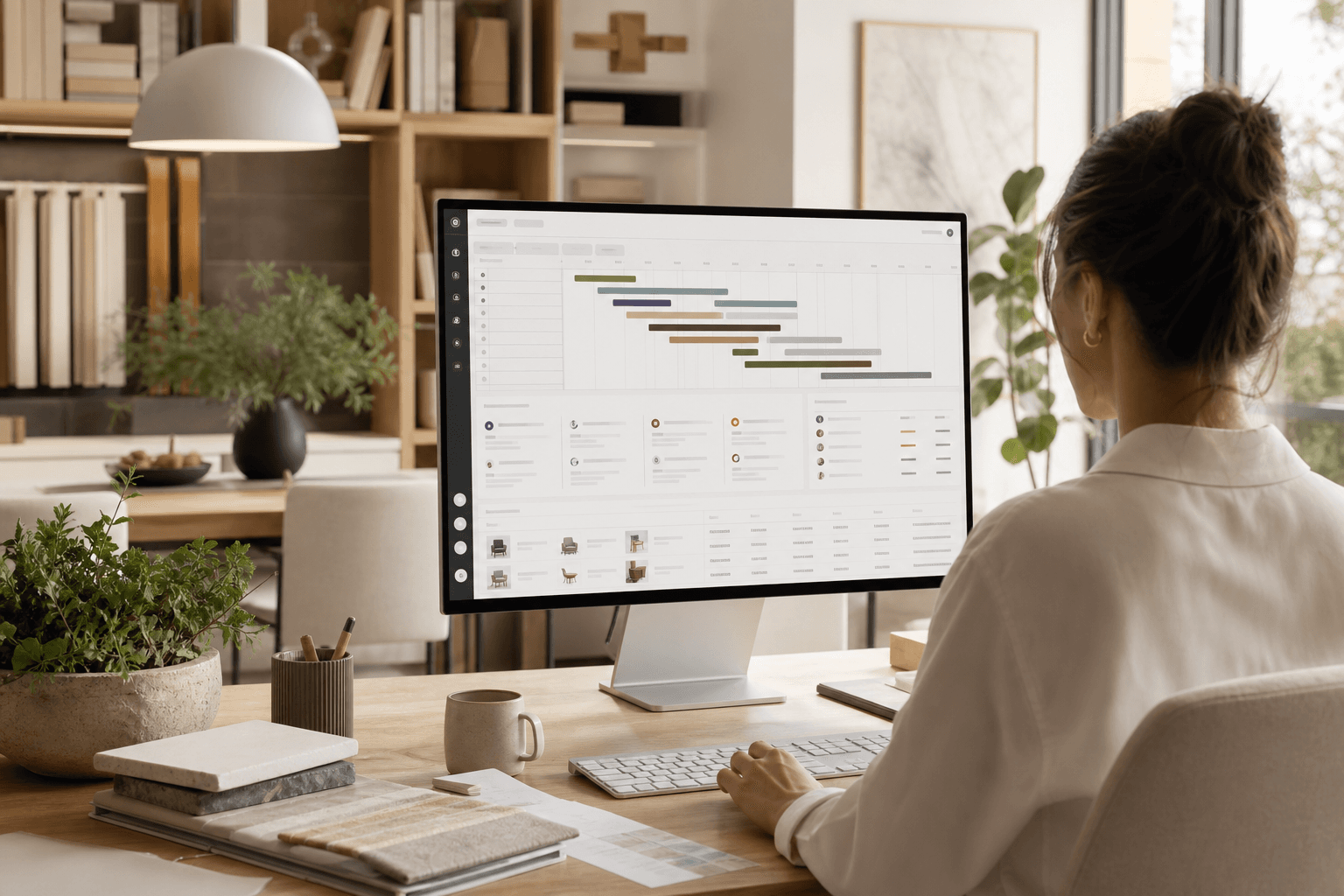
Software built for design studios—not generic construction ERP—keeps designers in the tool daily. Focuspilot unifies project phases, FF&E procurement, jobsite-ready documentation, and client portal approvals so construction management does not mean another spreadsheet beside your design files.
Is construction management right for your studio?
Not every designer must offer full CM on day one. Start with a single project where you already have strong GC relationships, clear scope, and a client who values coordination. Debrief honestly: did margin improve? Did stress decrease? Did the client refer you?
If yes, formalise the service in your proposals and train the team on site protocols. If no, fix systems before scaling—not ego.
Where to go next
Construction management is complex, but it is learnable. Pair site curiosity with documented systems and respectful trade relationships, and you add a service layer that many studios never master.
For the full picture on client communication, pricing, and emotional project cycles, read our Interior Design Project Management guide. To run your next build with connected tasks, procurement, and client approvals, try Focuspilot free.