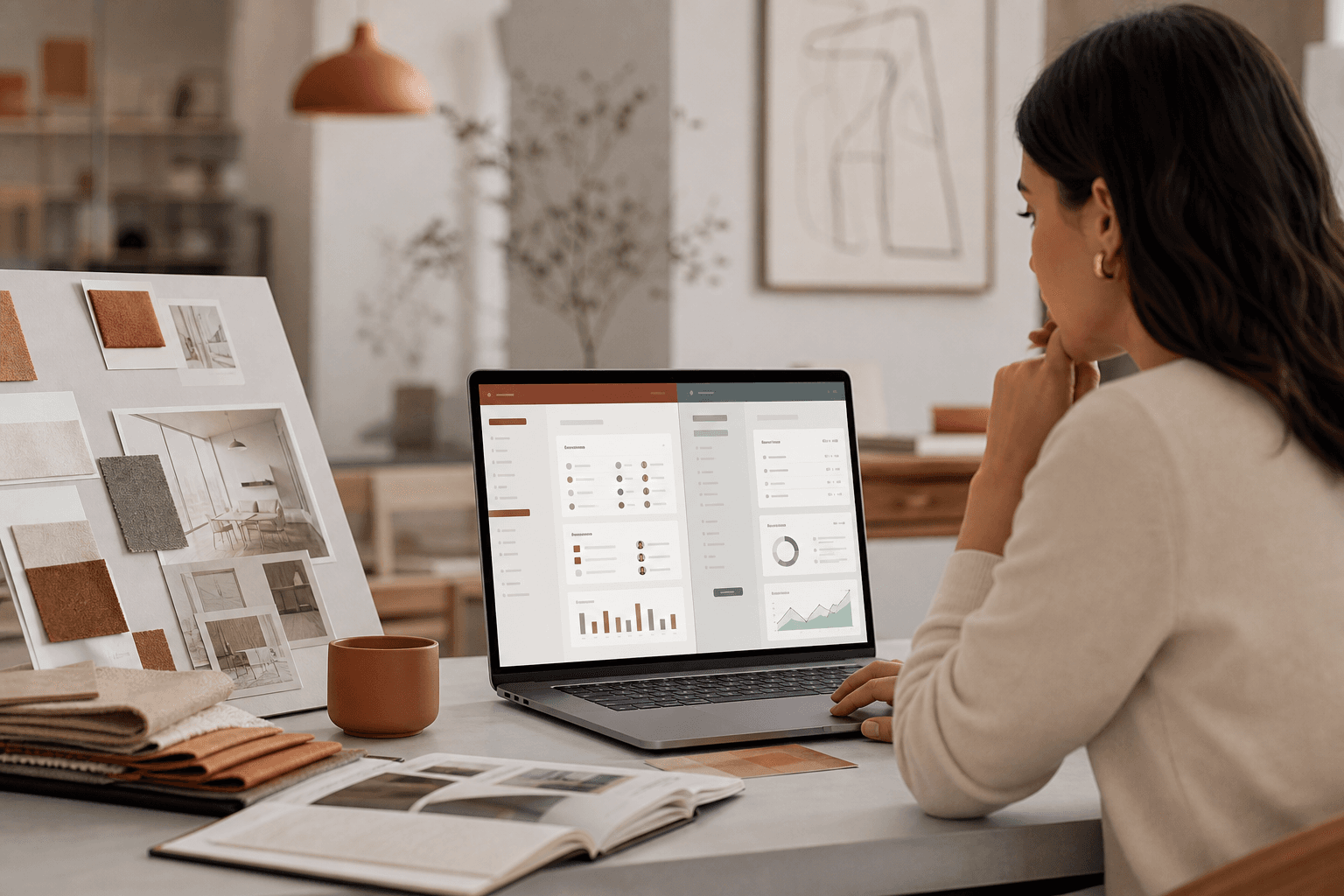

As an interior designer, beautiful design is only one part of a successful business. The real magic—and sometimes the real challenge—happens in project management. Managing design projects effectively determines how profitable, sustainable, and enjoyable your career can be.
Solid systems, clear communication, and confident leadership can transform not just a single project, but an entire design practice. This guide covers what it takes to manage design projects like a professional: from setting boundaries to leading on the jobsite, from working with contractors to navigating client emotions.
Whether you are a new designer or a seasoned professional refining your systems, use this as your reference for interior design project management that protects margin and builds trust.
Why project management is the foundation of a thriving studio
Interior design project management is where creativity meets structure. Without it, even the most beautiful concept can crumble under missed deadlines, miscommunications, or blown budgets.
Project management gives you control. It helps you balance creative inspiration with logistical precision, ensuring designs are visionary, buildable, profitable, and aligned with client expectations.
Good project management means:
- Delivering what you promised, when you promised it
- Maintaining clarity across clients, trades, and team members
- Avoiding unnecessary stress and costly mistakes
- Building trust—clients see you as a project leader, not only a stylist
Setting the foundation: scope, value, and expectations
Defining your scope of work
A clear scope of work is the backbone of profitable delivery. It defines deliverables, clarifies involvement, and prevents misunderstandings. Vague scopes lead to scope creep.
Be specific about what is included and what is not. Outline design phases, meetings, and revision limits. Document everything in writing and have clients approve before work begins.
Evaluating project value
Not every project deserves a yes. Before accepting work, ask:
- Does this align with my business values and expertise?
- Is the client’s communication style compatible with mine?
- Is there a healthy budget and realistic timeline?
Knowing when to decline is as important as knowing when to accept.
Setting clear expectations early
From the first meeting, establish how you work, how you bill, and what communication you expect. Confidence in your systems sets the tone for mutual respect.
Communication, logistics, and leadership
The power of assertive communication
Assertive communication is clear and confident—not pushy. Whether you are talking to clients, contractors, or vendors, expressing expectations firmly and professionally shapes how others perceive your authority.
- Replace apologetic language with factual statements
- Do not overexplain your fees; your value shows in results
- Lead with calm confidence when issues arise
Logistics and planning
Behind every seamless project is meticulous planning: scheduling trades, tracking orders, managing deliveries. Create systems that support you—checklists, digital boards, regular jobsite updates—and keep a detailed project record so the whole team stays aligned.
Studios that centralise tasks, procurement status, and client approvals in one platform reduce the friction of scattered email and spreadsheets. Tools built for interior design workflows—like Focuspilot—connect phases, FF&E, and client portals so logistics do not live in three different places.
Managing the human side
Work-life balance and boundaries
Managing projects while maintaining a life outside work takes intentional boundaries. Prioritise what matters and delegate what does not. Lean on systems, your team, and your community—needing help is not a weakness.
The emotional cycle of a project
Every project has emotional phases: excitement, stress, overwhelm, frustration, and eventually joy and pride. Knowing these stages are normal helps you stay grounded and support clients through their own anxiety. When things feel chaotic, return to your systems—they are your anchor.
Seasonal energy management
- Q4: Holiday deadlines and client stress—plan early and communicate timeline limits clearly
- Spring: Workload ramps up; manage capacity intentionally to prevent burnout
- Summer: Use slower months to rest, refine systems, and invest in marketing
Downtime is not wasted time; it is when you regroup and strengthen the systems that support creativity long term.
Client management: choosing, guiding, and protecting relationships
Vetting clients and projects
A good client fit can make or break a project. Look for clients who trust your expertise, communicate clearly, and understand that good design takes time. If you sense misalignment early, decline gracefully rather than endure a toxic project later.
Managing budgets and expectations
Never assume a client’s budget. Ask, clarify, and get agreements in writing. Discuss allowances and contingencies upfront—these murky areas are where your guidance sets you apart.
If budget shifts mid-project, pause and realign before proceeding. Uncomfortable conversations protect profit and professionalism.
Handling difficult clients
When a project becomes emotionally draining, your wellbeing comes first. Set boundaries, document every decision, and if necessary, exit professionally. Protecting your energy is one of your most valuable resources.
On-site management: leadership in action
There is no substitute for being physically present. On the jobsite you catch details others miss, strengthen contractor relationships, and understand construction realities. Each visit builds confidence and earns respect from trades.
When mistakes happen—wrong tile ordered, misaligned specs, vendor issues—stay calm and focus on solutions. Your response sets the tone. Document everything, communicate proactively, and avoid rushing construction; shortcuts usually create more cost than they save.
Clear boundaries are tools for respect, not barriers. Lead with professionalism and your team will mirror that tone.
Pricing, profitability, and systems
Pricing projects the right way
Price for value and complexity: client demands, team size, vendor reliability, scope and unknowns. Price for the profit you need—not survival. Confidence in your process communicates expertise without line-by-line fee justification.
Systems and documentation
Systems turn chaos into order. Standardised proposals, repeatable workflows, contracts, and communication records protect you legally and let you scale without losing control.
Communicating your value
Part of project management is teaching clients how much you coordinate. When they understand dozens of details behind the scenes, they see your true worth. Every conversation is a chance to reinforce that value.
Growth and longevity
Construction and design delivery have a learning curve; every mistake is a lesson. Ask questions, observe how builders and architects problem-solve, and keep learning. Humility paired with curiosity makes great designers unstoppable.
Build industry relationships beyond the surface—understand contractor and vendor pain points, be reliable, communicate respectfully. Over time, say yes to projects that energise you and no to those that pull you away from your goals.
Final thoughts
Project management is leadership in action. It turns creative ideas into tangible, livable spaces. As interior designers, we guide, coordinate, and lead. When we embrace that role, we elevate our businesses and our industry.
Set boundaries. Communicate clearly. Keep learning. You deserve to be seen, respected, and valued as the professional you are.
Ready to put systems behind your leadership? Start a free trial of Focuspilot—projects, procurement, client portal, and finance in one workspace built for design studios.